Overview
At different ages and life stages you'll have different priorities - join our pension expert, Clare Moffat and our Consumer Finance Specialist, Sarah Pennells to explore the ways to get help with your finances to make smarter choices for your future.
Key learnings
- Understand your money priorities at different stages of life
- Learn how saving, investing and pensions can work together
- Know where to go for trusted guidance and support when making financial decisions
Recorded 23 July 2026 | Duration 45 mins
Your guide to smarter money choices at every age
View transcript
Hi, I'm Sarah Pennells and I'm the consumer finance specialist here at Royal London. And I'm Clare Moffat, I'm Royal London's pensions and tax expert.
And in today's webinar we're going to be talking about the financial decisions you take at different stages and the help that you can get.
Now we always love getting your questions and this time around we've had hundreds of them. And we'll be answering some of the most popular ones during the webinar.
As with all our webinars, we can't give financial advice, but we will explain some options and steps you can take.
If you'd like to ask a question as we go through, we'll leave time at the end to answer them and we would love to hear from you.
I can see some questions have already come in, but we can't answer a question that's about your specific circumstances or Royal London policy.
So if you want to leave a comment or ask a question, then please use a Slido link to do that.
We are recording this webinar and we'll share a link to the recording afterwards with everyone who registered for it.
And if during the webinar the streaming freezes, please refresh your page and that should resolve the issue.
We receive a lot of questions about budgeting, saving, pensions, investing and how they all interact, but also questions about where people can get help with their finances.
At different ages and stages, you'll have different priorities. And we had this question from Sarah, who says, I’m mid 40’s on a moderate income and paying a mortgage and not in a position to save. What are the best things I could consider doing at this stage to make my money work harder?
And Sarah, that's who asked the question, it doesn't matter what age you are. If you want to make your money work harder, a good starting point is a budget. Now, I don't know if you're someone who's already budgeting and if not, if you love a budget. If you don't. What is your starting point? Well, our budget is just a list of money coming in and going out.
You can use a budgeting app, spreadsheets, or just a pen and paper, but the main aim is to help you get a clear picture of your finances and take control of your money. We have a guide the details of what you're below the live stream that explains, in simple terms how to start budgeting.
Well, let's find out who already has a budget. The question for our first poll is do you have a budget? So please vote now using the Slido link.
Sorry the poll hasn't come up yet, so just give us a second or two. Excellent. Okay. Votes coming in.
Well, early results are showing that lots of you have a budget, but don't always stick to it, so. Oh, no, actually, it's changing as I speak. So the most popular answers are yes, but I don't stick to it or yes, and I do. So I'd say sort of almost half say they have one but don't always stick to it. Fewer than 1 in 5. It looks like Clare said they've never had a budget and some people used to.
But essentially, whether you already have a budget or don't or had one once, there are four steps. Step one is to gather all the details you'll need, such as information about your take home pay or other income, including any irregular payments. You should also make a list of your regular and occasional spending, so this means writing down how much you spend on bills, things like birthday presents, getting your hair cut, and so on. If you're using an app, it can do some of the hard work for you.
Step two is to spot where your money is going, and if you're spending money on things you don't use or need like streaming services, magazine subscriptions, gym membership, and once you notice where money is slipping through your fingers, you can consider cancelling. But make sure to check for any exit fees or penalties before you do this.
Step three involves reviewing bills and looking for ways to cut regular household costs. So that's essentially shopping around for a better rate, tariff or deal, or seeing if you're entitled to any discounted rates. And we have a guide on how to save money on household bills.
The final step, step four, is to think about an emergency fund. Now, this helps you to plan for irregular expenses if the boiler breaks down, or if your car needs a new tire. Our latest financial resilience research shows that almost 1 in 5 adults, 19%, have less than 100 pounds in cash savings.
That means that they're in a very precarious position if they have even a relatively small, unexpected bill. It's often a good idea to have 3 to 6 months of spending in cash savings for an emergency. However, that may be a lot of money, but don't be discouraged. Start saving a small amount every month into this emergency fund.
If you set this up as an automatic payment on the day you get paid, then you won't notice this as much. This money has to be available if you need this in a hurry. So it's a good idea to have it in an easy access savings account or a cash ISA.
So the next thing you might want to think about is ISAs, or individual savings accounts to give them their full name. Now, we often get asked about the difference between stocks and shares ISAs and cash ISAs.
Cash ISAs are very similar to ordinary savings accounts, except that you don't pay any income tax on the interest you earn. With the stocks and shares ISA, your money is invested rather than saved, but you don't pay income or capital gains tax on any profits or when you take money out.
Under the current rules, you can save up to 20,000 pounds a year in a cash ISA, or you can invest up to 20,000 pounds in a stocks and shares ISA. Or you can split your money between them. Any interest or gain if you have a stocks and shares ISA doesn't count towards the annual ISA limit. That limit only applies to money that you pay in.
It also doesn't apply to money you've transferred directly from another ISA. Whether you put your money into cash ISAs, stocks and shares ISAs or both is down to you.
If you’re aged between 18 and 39 and you don't have your own home yet, then you might want to save into a lifetime ISA or a LISA.
This lets you save or invest up to 4,000 pounds a year. The key attraction of LISAs is that the government will add a 25% bonus to your contribution. So if you pay in the maximum of 4,000 pounds a year, the government bonus would be 1,000 pounds a year.
You can only use a LISA to buy your first home if it costs up to 450,000 pounds, or towards your retirement. Now the cap on the house price has proved a problem for some first-time buyers in London and the South East of England, where a first home can cost more than that.
If you take money out of a LISA and it isn't for the first home or retirement, then there is a penalty called a withdrawal charge applied.
So just to recap, with a cash ISA, interest is tax free. You can save up to 20,000 pounds a year. With a stocks and shares ISA, the money is invested rather than saved. With a LISA, this is designed to help first-time buyers. But there are some restrictions, so it's not suitable for everyone.
And Stephen asked about LISAs, saying, I'm trying to determine the benefits of saving with a LISA versus setting up a private pension. He goes on, someone said that a LISA is not worth it and that I should just use a pension.
Well, the answer is that it really depends on what you want to use it for and what rate of tax you pay. So if you're saving for the first home, then a LISA can be a really good idea. For saving for retirement, the bonus from the government works out better if you're a basic rate taxpayer, but the rules say that you have to stop saving into it when you're 50 and you can't take money out until you're 60. Now, that might not work for you.
and what rate of tax you pay,
If you are a higher rate or above taxpayer, then paying into a pension would mean more tax relief from the government. But one point we need to make is that the LISA limit of 4,000 pounds counts towards your total ISA limit of 20,000 pounds.
Also, the government has announced it will be replacing the lifetime ISA with a first-time buyer ISA, and the government launched a consultation into the first-time buyer ISA last month. But it could be a few years before we see the rules and regulations on how it will work.
If you think that you want to buy a home, are under 40, and especially if you don't live in the South east of England, then it might be a good idea to open a LISA, even if you don't pay much into it just now, as it means you'll still be able to pay into it in the future until you're aged 50.
So that's the changes to ISAs for buying a first home, but it's also worth touching on a big change to ISAs that's due to be introduced in less than a year's time in April 2027.
This change, which has received a lot of media coverage, means that the amount you'll be able to save into a cash ISA will fall from 20,000 pounds a year to 12,000 pounds a year if you're aged under 65. Now there's some confusion about this change, so let's be really clear.
This won't affect any money you've already saved in cash ISAs. However, the new 12,000 pounds allowance will limit money you pay in from the start of the tax year in April 2027, if you're aged under 65.
This will undoubtedly affect some people, but possibly fewer than you might imagine. Last year, we carried out some in-depth research into people's understanding of ISAs and how they use them. And this showed that only 16% of ISA holders had saved or invested the full 20,000 pounds allowance. Most people paid in less than 5,000 pounds a year.
However, the reduction in the cash ISA allowance will affect some people. So that's a bit about changes, but let's get back to what ISAs are and how they work.
When you take out a stocks and shares ISA, you'll be investing your money. Stocks and shares ISA providers may choose to offer different investment options, so this might mean that you can put your money into a fund that invests in lots of different types of stocks and shares, or you might select your own investments from a range of individual funds, either by yourself or with the help of a financial advisor.
And we had a question from a different Sarah, a lot of Sarahs here, and Sarah asks, is investing in stocks and shares ISAs recommended for increasing wealth as opposed to placing funds into savings accounts? And Francesca wanted to know if she should be saving or investing?
Well, we said at the start of the webinar, and I'll say it again, we're not able to give financial advice. As a general rule, over the longer term, investments tend to produce a higher return than leaving your money in a savings account.
However, any return is not guaranteed, and it's normally recommended that you leave any money you invest for at least five years to give you enough time to ride out the ups and downs of the stock market. However, you can take it out later if you need it.
We're going to talk about financial advice later, but if you're thinking about whether to start investing, perhaps by paying a regular monthly sum into stocks and shares ISA, and you can't afford or can't access financial advice, then a new form of advice called targeted support may be able to help you make your mind up.
Targeted support is designed to offer financial suggestions to people in common situations. It isn't full one-to-one financial advice tailored to every detail of your life. However, it is much more actionable than the generic guidance most people receive today. And importantly, providers can offer it to customers for free.
It has only been available since April, so it's probably worth explaining how it works. Targeted support is usually a free digital service typically offered through your pension provider or bank. You start by answering a few questions. For example, when you hope to retire, how long you want to invest for, or how much income you'll need.
From those answers, you'll be grouped together with people who have similar financial circumstances, needs, or goals. The provider identifies what typically helps put that group in a better position based on data, expertise, and regulation, and you'll receive clear, tailored recommendations that are suitable for people in your group.
A recommendation that you can act on now, it won't replace personalised and individual advice that you would get from a financial advisor, but it will provide much more tailored help. Now, over the coming months, there are likely to be more financial providers offering targeted support.
Whether you plan on taking financial advice, making use of guidance or targeted support, or deciding entirely on your own, it’s useful to understand that across these longer periods, the benefits of compounding really become apparent, which is just the magic of time.
This means that when any investment gains are reinvested, it gives you the potential to achieve returns on your gains as well as the money you put into your ISA. However, as with all investments, returns are not guaranteed and you could get back less than you paid in.
Now, people are very aware of this so-called investment risk, but may be less aware of the effects of inflation on money and savings, such as their cash ISA. Inflation measures how fast prices are rising for the everyday goods and services we buy, such as food, petrol or a haircut.
If the interest you earn on cash savings is less than the rate prices are going up by, then the value of your money is falling in real terms. And remember, if your money is in an ordinary savings account, any interest could be taxed.
any interest could be taxed.
Investing offers greater potential for your money to grow in value above the rate of inflation over the longer term, so it can maintain its buying power.
So that's a bit about investing, but when would you use stocks and shares ISAs? Well, unlike pensions which are designed for retirement savings, stocks and shares ISAs can be used for a range of purposes.
But because they're designed for longer-term investing, they wouldn't be what you'd pick for next year's holiday savings. But they could be good if you want to save for a new car or kitchen in five or more years, or you're saving for your children's education.
Or you might want to invest in a stocks and shares ISA if you want to stop work before you'll be able to access your pension, and will need some money to live on in the meantime. The age at which you can currently access your pension is 55, but it's increasing to 57 in April 2028.
in a stocks and shares ISA
For those who are closer to retirement, you might want to pay into pensions and ISAs. Pensions are a very tax efficient way of saving for your retirement, but ISAs are tax free when you take the money out, which could be useful especially for those who would otherwise pay a higher rate of tax in retirement.
Now we've covered budgeting, saving and investing in ISAs, but the other part of the saving story is pensions.
As you get closer to retirement, you'll probably start spending rather more time thinking about pensions. However, that doesn't mean younger people aren't interested in pensions.
In fact, our research found that younger workers were more inclined to make changes to their pensions than older employees. They often engage more with pension provider apps too, and many of these have useful guides and tools as well as information about your pension.
And we had a question from Victoria who wanted to know the best financial advice for someone in their early 30s. She asks, what should I consider?
Well, again, this isn't advice, but the earlier that you start paying into a pension, the more affordable it is on a monthly basis.
If you’re aged 22 and over, you'll be automatically enrolled into a workplace pension. It might feel tempting to choose to opt out though, maybe because there are lots of other competing costs, or because you want to save for a house rather than a pension that you can't access until you're at least 57.
However, if you are an employee or you work in a contract and you've been automatically enrolled, then opting out means that you lose the benefit of a top up from the government called tax relief, as well as the money that your employer pays into your pension for you. And these, particularly your employer contribution, can add up to quite a lot of money.
Now, we've spoken a lot in the other webinars about workplace pensions and how tax relief works, but we also have guides on the royallondon.com website, including one that goes through the reasons for paying into your workplace pension.
Now we run the numbers on the difference that would make if you started saving into a pension at the ages of 18, 22, 30 or 40.
There are a lot of numbers on this slide, but don't worry, it's the theory that's important. We've worked out these numbers based on a starting salary, and then with an increase of 2.5% every year. Pension contributions of 8% of the person's salary being paid in, so that's made up of contributions from the employee, the employer and tax relief, and the pension fund growing by 5% a year after charges.
And the key point is that someone who started saving into their pension at age 30 would have around a quarter less than someone who started aged 22. And someone who started saving at 40 would have less than half of that compared to someone who started pension saving when they were 22.
Now we had another question from Laura, who says, I only started paying into a pension at the age of 38. Is this too late? Am I doomed to work forever?
Well, Laura, I wouldn't say you're doomed to work forever. And the amount that you need to save will depend on a range of factors, such as whether you're likely to have to pay rent or mortgage once you retire, the kind of lifestyle you'd like, and how much you and your employer put in if you're employed.
And I will say, Laura, that sometimes the numbers around how much you might need for retirement may seem daunting, but for most people, it's better to have some money set aside than none at all.
If you're planning to work until you get your State Pension, you could have 30 years or more of building up your pension pot, so it's definitely not too late.
Now, another question we had comes from Georgia, who wants to know, are there figures or salary multiples that can be used as a rough guide to how much to save in your pension by age?
Sometimes you might hear that the percentage of your salary should be half the age you start saving. So 11% of your income if you start saving at the age of 22, but 20% if you start saving at the age of 40. That percentage includes your contribution, tax relief from the government and any employer contribution.
But that can worry people and make them think there’s no point saving into their pension if they can’t afford anything like that. It is a good idea to increase your pension contributions as you get older, but if you can only afford the minimum amount, that’s okay too. There might be a time when you can pay in a little more.
This is similar to a question we got from Anna, who wants to know how much you should put away for a reasonable pension. We’ve spoken in previous webinars about how to work out how much to save for retirement. As Sarah mentioned in her response to Laura’s question, it all depends on what you want your retirement to look like, as well as what you can afford to save.
There’s something called the Retirement Living Standards, which we’ve mentioned before. They’re independently calculated and are a useful way to work out how much you might need, based on three different retirement lifestyles: minimum, moderate and comfortable. We have a guide on how to manage your money in retirement, which discusses these, and we also have a link to the Retirement Living Standards so you can see what those different lifestyles enable you to do.
One thing we would strongly suggest is that you don’t opt out of your pension, and if you can afford to increase the amount you pay in, perhaps at pay review time, it’s often a good idea. It’s especially the case if your employer pays in more than the minimum, or will match extra money you pay in pound for pound.
Your employer or pension provider will normally have a website where you can see how much extra it would cost you to increase your pension contributions, and it may not be as much as you think. That’s because of the benefit of tax relief and pensions reducing the amount of tax you pay.
For example, say you live in England and your pay is 55,000 pounds a year. You might think you would pay some higher rate tax, but because 5,000 pounds goes into your pension, the amount you pay tax on is 50,000 pounds, so you only pay basic rate tax. Pensions and charity donations are the only things that reduce the amount of tax you pay. So if you are just over a tax band, paying a little more into your pension might help you pay less tax today, as well as giving you more income in retirement.
When you’re younger, you’ll normally be paying less into your pension anyway because, if you’re in a workplace pension, the amount you pay in is a percentage of your salary. When you’re younger, in general terms, your pay is likely to be lower. As you get older, pay normally increases, so that means more goes into your pension. What commonly happens is that as people get older and closer to retirement, they want to pay more into their pensions. That might be because children have moved out, the mortgage has been paid off, earnings are higher, or they may have received an inheritance.
Before we move on, time for another poll. We want to know if you’ve increased the amount you pay into your pension. So please vote now.
Okay, so this is interesting. Quite a few have paid extra in through their regular monthly amounts. About 1 in 10, or 1 in 8, have paid in a lump sum. Almost half say they’ve increased regular contributions, which is a really good way to do it.
Now we’ve talked about different ways to see the value of pensions and what might work at different ages. But how do all of these work together? A lot of people asked about this. Scott asked, how should you prioritise debt versus saving versus investment and pensions? And Steven asked, as rising living costs and mortgage payments reduce disposable income, what practical steps can people take to balance immediate financial pressures with long-term savings and retirement goals?
It can feel difficult thinking about years in the future when you’ve got a mortgage, credit cards, debts and other bills to pay today. If you’re in a situation where you’re in a lot of debt and are struggling, then it’s important to get advice from a debt advice charity like StepChange. Making sure you pay your priority debts, like mortgage, council tax and energy bills, is crucial.
But if you do have some spare money after all the bills are paid every month, then it’s a good thing to think about what you need today, your emergency fund, longer-term savings, and what you’ll need in retirement.
Saving into a pension happens automatically if you’re an employee or worker on a contract, and your contributions are also taken automatically. That means you can look at whatever comes into your bank account for other savings and investments. If money moves as soon as you’re paid, that can help manage your disposable income: some money into an emergency fund, savings for special events like Christmas or birthdays, some to your stocks and shares ISA, and perhaps overpaying your mortgage by a small amount every month, which can help you save thousands in interest payments.
If you do have financial decisions to make, where can you get more help? The answer might depend on how old you are and how much money you have. Financial advisers can advise you on lots of money matters, like pensions and investments, but they may ask that you have a minimum amount in investments or to invest.
You may have thought about taking financial advice but been unsure about how it might benefit you, or maybe you’re unsure about what a financial adviser does. A financial adviser can help you in several ways. They can understand your needs by building up a picture of your overall personal financial circumstances and agreeing with you the areas you should prioritise. They can discuss pros and cons and potential solutions, considering which products could be right for you. Finally, an adviser can make a recommendation tailored to your needs, making sure you get the right balance between what you can afford and what you need.
There are two different types of financial adviser, and it’s important to understand the difference between them. Independent financial advisers, or IFAs, are able to consider all types of products from firms across the whole market when making their recommendations. Restricted advisers are limited to certain types of products or certain providers. Both types of adviser are regulated in the same way and both have to have a minimum level of qualifications before they’re allowed to practise.
We had a lot of questions about how to find a financial adviser. Gloria said, apart from asking friends and family, how do you find a really good financial adviser? Stuart had a similar question. We have a guide on getting financial advice, which gives a detailed explanation about how to find an adviser, has links to directories, and includes questions to ask a new adviser. Many financial advisers will offer a free first appointment so you can meet them, and that can be really useful.
We also received some questions about financial advisers and how they’re paid, including one from Raushanara, who asked whether only a few financial advisers offer fixed-fee services as an alternative to fees based on assets under management. Jake asked about cost too.
A financial adviser must tell you how they’ll charge before you become their client. It’s part of the rules all advisers must follow. The most common ways advisers are paid are by a fixed fee, an hourly rate, or by taking a percentage of your investment. That could be a percentage for their initial advice and then an amount for ongoing advice. Their charging structure must be clearly explained to you. Don’t be worried about asking, because how much you’ll pay is very important.
And it's also important to know that there are financial advisers, often called mortgage brokers, who specialise in helping with mortgage advice and making sure that you get the best mortgage deal possible. But they are normally paid a commission or a fee by the mortgage or insurance company.
If you're younger and you want help to understand if you could afford to buy a house, or you want to remortgage, then talking to a mortgage broker is a really good idea.
But they can help with more than mortgages. They can also help with products that protect you if the worst were to happen, like being very ill or dying.
Even if you're still renting, then it's also useful to speak to someone about how you would protect your income if you became ill, because rent still needs to be paid.
Taking out a policy that will pay out if you can't work due to illness when you're still young is a really good idea. The main reasons are that it costs less each month the younger you are, but it also means that you'll have that safety net if the worst were to happen.
And Karen and Lynn both ask questions about when to take advice before retirement. Karen said, I'm about eight years away from retirement. When should I think about seeing a financial adviser? And Lynn asked, how soon in advance of planned retirement should you seek professional advice?
As with many of our questions, the answer is it depends. Many people wait until they're closer to retirement before they take financial advice, and maybe they have already had an appointment with the government-backed and independent Pension Wise service to understand their options.
But taking financial advice earlier can be very beneficial. An adviser will help you to understand when you can retire and what you can do to make that happen sooner or help increase the amount you have in retirement. And financial advice isn't just about pensions, but your whole life.
You can also get information from your workplace or from your pension provider. Our workplace pensions report showed that almost 4 in 10 employees with a workplace pension said that their pension provider was the main source of information about their pension. Meanwhile, employers were a close second, with almost a third of employees relying on them.
While these sources of information were very popular, an increasing number of people are turning to social media or finfluencers for help and advice with their finances.
So let's have another poll. We want to know whether you have used social media or AI for any of your financial decisions, so please vote now.
This is interesting because most people, around three quarters, have said they've not used either. Some have used AI such as ChatGPT. Fewer have used social media, only around 6% or 7%, and some people have used both. I have to be honest, I expected more people to say they'd used either social media or AI.
Many money bloggers and finfluencers use social media channels as a way of sharing information about their personal experience of managing money, and this can resonate with people in a powerful way. However, there's a risk that content can be unreliable, unverified or misleading.
Farooq asks a question about this: how can consumers fact-check guidance from tools like ChatGPT or finfluencers against their own pension goals? And is there a simple red flag checklist to spot bad advice before acting on it?
While there is useful information on social media, it can be hard for people to know what's accurate and what's inaccurate. Recently, the financial regulator, the Financial Conduct Authority, took action against some finfluencers who appeared to be giving unregulated advice, which is likely to serve as a warning to others.
But AI is making it easier for fraudsters and scammers to target consumers with financial information that looks credible and legitimate. One red flag to look for is if people are putting you under pressure to make a quick decision or say that this is an investment that others don't know about.
If you're going to look for help on social media, then it's a good idea to check that information with independent and government-backed sources such as the MoneyHelper website. It's also worth looking at pension company websites like our own royallondon.com pages, which have guides covering a range of topics mainly written by Sarah and myself.
Pension apps or webinars like this one today can also provide good information. Financial services companies are regulated and often provide good educational content.
So we've covered a lot in the last 30 minutes or so, but we're keen to answer some of your questions. Before we get to those, I'd like to answer one question that we had in advance, which is from Roland, who wants to know: does Pension Wise, the government-backed service, offer all I need to understand my options, or will I still need a financial adviser?
For people who aren't familiar with Pension Wise, as we mentioned in the webinar, it's an independent and government-backed service. It's designed to offer help to people who have defined contribution pensions, so pension pot-type pensions.
If you're aged 50 or over and you have one or more of these pensions, or if you're younger and you've inherited a defined contribution pension, then you're eligible to get an appointment with Pension Wise. You can do this over the phone or online.
In that appointment, the different options available to you when you want to take money out of your pension are explained to you, along with what the implications of those options could be.
But the question is a really good one because Roland could still need financial advice. Your Pension Wise appointment will explain the options, but you still might need help to work out which option is the best option for you. Some people use both. For some people, Pension Wise is enough and they can make a choice, but financial advice may still be needed if you want that personalised approach and planning for the rest of your life.
So, Roland, it feels a little bit like one of those “it depends” answers, but I hope that's helpful anyway.
Okay, so let's look at the questions that have been coming in. We've got one here from Niraj, who says, I have multiple pension pots. Is it a good idea to merge them into one? And if yes, at what age should I be merging them into one?
We've covered this in a couple of webinars, but it is a topic a lot of people want to know about, especially as these days younger people tend to have more jobs and switch jobs regularly. So what should Niraj think about?
I'm afraid it's another “it depends”. For younger people, if you have multiple pots, combining them can seem like a good idea because it's easier from a life admin point of view to deal with one pension provider rather than multiple pensions.
What we would always say is, if you are working, your employer is going to pay into the pension pot they pay into, so don't move away from that one while you're working because that's where the contributions are going.
It might be that you decide to transfer your other pots into that one. For some people, this is something they think about as they get closer to retirement. But be a little careful, because some much older pensions, maybe from the 1980s or 1990s, can have valuable guarantees. Others may have something called a protected pension age, which means you can access them a bit sooner. So it’s really worth checking whether there’s anything attached to any of those pots that would mean it isn’t a good idea to merge them together.
As Sarah said, this is one of the top questions we get asked, and we do have lots of information in guides on our royallondon.com pages. It’s also worth thinking about why you might want to transfer if it isn’t just for life admin. It might be because the firm you want to move to has different investment options, or it might be to save money on charges. Check the charges you’re paying on the pensions you want to transfer and where you want to transfer them to.
And if you have a few older pensions, it might be that some of them are more expensive and you may want to transfer them. It might be that some are cheaper and you leave them where they are. So that’s why it is a kind of “it depends” answer, but I hope that’s helpful to you.
It might be worth also saying that at some point, maybe in a year’s time, we’re going to have something called the pensions dashboards. That’s where you’ll be able to see all of your pensions in one place, including your State Pension. That should make it easier from a life admin point of view to know what you’ve got.
You might also have lost track of some pensions. We always talk about the fact that there’s about 31 billion pounds in lost pensions, so that is coming. We don’t have a definite date for it yet, but that will help.
We also regularly talk about finding a lost pension in our webinars. There’s a government service that’s free to use which can help you. It won’t tell you where your pensions are and bring them to you, but it will give you up-to-date contact details. You can then contact the pension provider and say, “I may have a pension.” You don’t need to pay for this service, which is a point worth making.
We’ve had a question from Andrew, which I think we’ve kind of covered, but maybe it’s worth summarising: is it better to have your money in a pension or in an ISA?
Ideally, a bit of both. Pensions are for your retirement savings, and it’s a good idea to be paying into them. ISAs can help because you can take money out tax free in retirement, and that can be useful if you want to take out bits and pieces at different points.
ISAs are also very useful before retirement. If you’re saving for something, stocks and shares ISAs can be good for a period of over five years. For example, saving for children’s education or helping them later on. You couldn’t put that money into pensions if they’d be too old by then, so it’s about working out when you want to access that money.
It’s about time, really. That’s the most important thing. If you can put something into both, then that’s the ideal position: you’ve got money for the short to medium term and you’ve got money for the future at retirement.
We’ve got a question from Leona, which is really interesting. Leona says the State Pension age keeps rising. How does that affect my workplace pension?
The State Pension age started rising again in April this year from 66 to 67, and that will be a two-year process. By April 2028, it will be 67. Sometimes there is a link between the State Pension age and your workplace pension. The most obvious link is if you’re in the public sector, because public sector pensions are quite often linked to State Pension age. For example, if you’re in the teachers’ scheme, it might say that it’s paid at State Pension age. If the State Pension age goes up, the age at which you could get that pension goes up too, although you may still be able to take it earlier, with a reduction.
If you have a defined contribution pot, you don’t need to retire to take that money out. Currently, as we mentioned, you can access that money from 55, and that’s going up to 57. But if you stop working at 57, you’ll have a longer period to fill before your State Pension begins. So you may need a larger pension pot, or more savings, to cover the gap before the State Pension starts.
We’ve had a question from Kate, who asks whether a stocks and shares ISA is a good idea in the current and future international climate. It’s a really good question. The main thing is to come back to the basics and think about why you are considering a stocks and shares ISA and what else you have. The worst thing would be to be forced to take money out of your stocks and shares ISA because you have nothing else and face an unexpected bill. So make sure you have a cushion of emergency savings first, then think about whether you can leave the money invested for around five years.
Five years isn’t a hard and fast rule, but it is often suggested because it gives investments time to ride out the ups and downs of the stock market. It’s also worth thinking about how you’d feel if the value of your money went up and down, because some people find that quite nerve-wracking. If markets go down and you’re putting money into your ISA monthly, you may be buying more for your money, so regular monthly investing can be a useful approach.
We’ve got a question from Dee, who says, my daughter is 15. Should I start paying into a pension for her now, and are there any limits I need to be aware of?
Anyone can have a pension, even a baby. Everyone can put 2,880 pounds a year into a pension and tax relief is automatically applied to that, bringing it up to 3,600 pounds. If someone has no earnings at all, that’s what can go into their pension. If your daughter has a part-time job and earns, for example, 5,000 pounds a year, then 5,000 pounds could go into her pension.
It’s great to think about helping younger people by putting money into their pension, but it’s also worth thinking about the next five years or so. Do you have other savings, perhaps in an ISA, to help if she wants to go to university or needs help with a house deposit? She won’t be able to access her pension until she’s at least 57, and that age could rise in future. So the key consideration is when she might need the money.
We’ve got time for a couple more questions. Joseph asks: I’m a UK taxpayer. Should I put 2,880 pounds into my pension each year and get tax relief back from the government, or put that into an ISA and take the money out tax free?
Again, it depends. When you pay money into your ISA, normally that money has already been taxed, unless it has been gifted to you. You then pay it into the ISA and can take it out tax free. If you’re a UK taxpayer, it depends on your circumstances. If you’re working, the pension contribution limit is generally linked to the amount you earn. For example, if you earn 50,000 pounds, you could potentially pay 50,000 pounds into your pension, subject to the relevant limits.
As we mentioned earlier, it can be useful to have a mix. When you take money out of your pension, you’ll usually get 25% tax free and then take the rest as income in some way, which may be taxed. You could then top it up with money from an ISA if you’ve been paying into one. If you can have a combination, that can be useful. And if you’re an employee, the benefit of pensions isn’t just tax relief; it’s also the employer contribution.
It is time for one last question. Jess asks: as a higher rate taxpayer, do I need to submit a self-assessment form to maximise my tax relief?
The top tip is to ask your pension scheme how it works. If you are in a salary sacrifice scheme, or some types of pension schemes, you may not have to claim it back because it may automatically go into your pension. If you are in a group personal pension that doesn’t have salary sacrifice, then you may need to claim that extra relief back.
You can go back several years and make a claim for years when you haven’t claimed. It’s a good question, because you could end up getting a fair amount of money back. You could use that in everyday life or pay it into your pension. It’s now an online system and is usually quite straightforward. The first thing is to check with your employer or pension provider what type of scheme you are in.
I’m afraid we don’t have time to answer any more of your questions. But before we go, we’re going to have one last poll: what topic would you like us to cover in future webinars?
Planning for death and what’s changing in 2027 seems quite high. It doesn’t sound very cheery, but a lot of people know there are changes coming next year. Because of the changes coming in on inheritance tax and pension pots, there has been a lot more interest both in the media and from consumers.
It’s neck and neck between understanding pension tax and planning for death and what’s changing. That’s really helpful to know. We always take notice of how you vote in the polls and use that to shape our future programme of webinars.
That’s all we have time for today. We’ll be sharing a link to the recording of the webinar in the next few days. But in the meantime, thank you for joining us today.
Thank you.
Meet our hosts

Sarah Pennells
Consumer Finance Specialist
Sarah joined Royal London in 2020 and focuses on producing content and resources to help customers. Sarah works in areas such as budgeting and debt, as well as dealing with life shocks, including illness and bereavement.
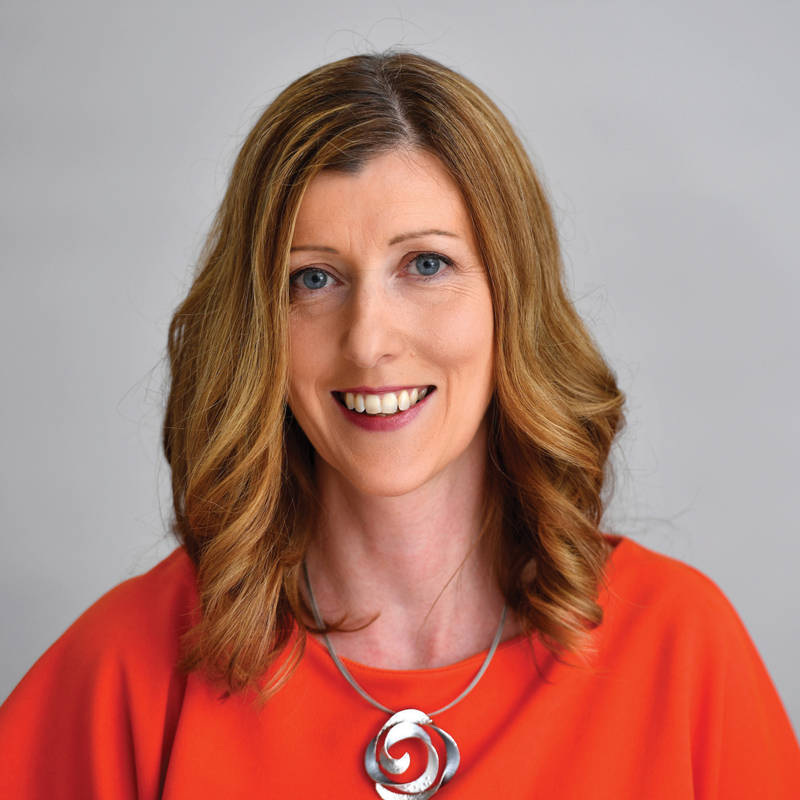
Clare Moffat
Pensions and tax expert
Clare joined Royal London in 2018 and is involved in consumer and wider industry issues. Clare is Royal London’s pension and legal expert and has appeared frequently on the BBC talking about a range of topics.
Disclaimer
The information provided is based on our current understanding of the relevant legislation and regulations at the time of recording. We may refer to prospective changes in legislation or practice so it’s important to remember that this could change in the future.