Overview
Join our pension expert Clare Moffat and Consumer Finance Specialist Sarah Pennells as they share tips on preparing for the retirement you want. Filmed as part of Pension Awareness Week on 11 September 2024.
Video Transcript
Jonny: Hello. Can you see me? I'm in a different position today. I'm not on the stage of being kicked off, and I'm joined by Rachel. How are you? How are you doing?
Rachel: Fine thanks.
Jonny: Being made in my space again. I'm getting told off when I get put here, but anyway, we're on the hot desk where all the questions are gonna be firing, to us from you. But anyway, before we get started, hello everyone. I'm Jonny. This is Rachel.
Rachel: Hello.
Jonny: We're from Pension Geeks, creators of the Official Pension Awareness campaign. And today we've got a great show for you how to get ready for the retirement you want hosted by Royal London. But before we get started, there's a few things that I wanted to tell you about, we've got a brilliant website. So a website that you're on now, we've created just for you Pension Awareness Day.com.
So if you're not booked onto the shows later on today, we've got a show with Aon. We've got shows again tomorrow with Royal London. If you're not booked onto them, make sure you get booked onto them. You can do it via this website. There's a timetable and a booking form where you can go and register. Also, if you've missed any shows, if you've missed a previous show with Royal London, ‘Is it a good idea to transfer a pension?’ you can go to this website as well and you can watch it in the catch up area, which is fantastic.
So, make sure you have, it’s got some great articles on there, some really useful links, everything basically that we're talking about in these shows. We have the resources and everything that you need in this website. It's gonna be there for the next 12 months, so make sure you use it as your go-to place when you're talking or thinking about pensions and pension questions.
Right? That is everything here, Rachel, isn't it?
Oh, I think would like to give an announcement actually to our partner this year, Royal London, partnering with us. I think we can have a graphic on screen to show Royal London as well. Can we see that full screen? Yeah. Oh, we can, we can. No, they are Royal London and we're very grateful for them partnering with us and we're having some great fun, aren't we?
Rachel: Some great fun we have and helping lots of people. Yeah. How many sessions we done so far?
Jonny: Four, isn't it? This is the fifth, yeah, four. And we're seeing record breaking numbers with thousands of you come into the shows, which is fantastic. So, we're gonna go into the studio now and see Sarah and Clare. Hello, Sarah and Clare. How are you doing?
Sarah: Hi Jonny. Really good, thank you. How are you?
Jonny: Very well, very well. I'm doing good. I'm excited about this show. Take it away. Tell us what we'll be learning today and tell us all about it.
Sarah: Thank you very much. Well, yeah. I'm Sarah Pennells and I'm a Consumer Finance Specialist at Royal London. And, and I'm joined today by Clare. Clare, just tell us what your job is. Tell us a bit about what you, what you do, and also what we'll be covering in today's session.
Clare: So I'm Clare Moffat and I'm Royal London's pensions expert. And today we're going to be talking about how to get ready for the retirement you want. So we'll be thinking about how you find out how much you'll need in retirement, how you can add to your pension before you retire, and also the rules about how to take money out of your pension and tax-free cash.
And we'll also be talking about where you might get help from, But we'll start by talking about the kind of pension that you have.
So there are two main types of pension. The first is a defined contribution pension. So jargon alert, sorry about that. What it means is that when you are working, you build up a pot of money and you pay into that and maybe your employer as well.
And then when you retire, you can either take lump sums out of it or use it to give you an income once you stop working.
Now, the other type of pension is a defined benefit pension. Now you might have heard this described as a final salary pension or a career average pension. They're both types of defined benefit pensions.
Now with a defined benefit pension, you get a regular income once you stop working and that lasts for the rest of your life. Now in this session, we're gonna be focusing on defined contribution pensions. Now the reason is that's the pension that you are most likely to be paying into today. In fact, we've carried out some research into workplace pensions with 4,000 UK adults who are under retirement age who have a pension.
And what we found is that over twice as many people have a defined contribution pension that they're saving into compared to the number who are saving into a defined benefit pension. So if you've got one of these defined contribution pensions, you need to think about how much you need in retirement to have that, that retirement that you want. Now that's going to depend on several factors, but the two main ones are when you want to retire, and we're going to come onto that in a few moments. And the standard of living that you want in retirement. Now, picturing retirement, well, it can feel quite tricky, especially if you're further away from retirement, but as you get closer, then it's probably a bit easier.
And it might also be easier if you've got a budget that you already have and that you currently stick to. And that's because you can kind of see the money that you spend now and you can think about the money that you'll spend in retirement, but perhaps the things that you won't need to spend money on.
And our research found about half of people have a budget in retirement, but whether you have a budget or you don't have a budget, hopefully you will have the full new State Pension. Now that's currently £220 a week, or just over £11,500 a year if you get the full amount. Now we analyse some data from the department, for working pensions, and we found that over half of people, who receive the new State Pension, so that means that they reach State Pension age after the 5th of April 2016. Well over half of them aren't receiving the full new State Pension.
Sarah: Quite a surprise, I think, wasn't it?
Clare: It was really surprising, so it's really important to check your State Pension forecast. now you can do that on gov.uk and that means you can check your national insurance record, see if you've got any gaps, and you might possibly be able to fill those gaps. Now, we've also got lots of information on State Pension on our royallondon.com website, but let's assume you are going to get the full new State Pension even. So the earliest age at which you can get it is currently 66.
So if you're about to reach State Pension age, you have to be 66 right now, State Pension age is going to increase to 67 by 2028, and there's planned increases to 68 later on as well. So if you want to retire before State Pension age, and our research finds that the most popular ages to retire are 60 and 65, then you're going to need some money, for that retirement to fill that gap.
Sarah: And our research found that quite a few people in their fifties and sixties, actually 60% of people didn't know whether they were saving enough for their retirement.
Now, as Clare said, it can be quite hard to picture your life in retirement and what that's gonna cost, but there's a really useful website called retirementlivingstandards.org.uk that can help you with that.
Now what this website has is different income amounts that you need for different standards of living. Now these, figures have been calculated using independent research, and they do assume that you don't have a rent or mortgage to pay, and it's any pension income that you receive has already been taxed.
Now let's just have a look at these in detail. So let's, can we have the first slide please, James? Let's assume, Clare was talking a moment ago about the full State Pension. So let's assume you get the full amount, now that's just over £11,500 a year.
Now, according to the retirement living standards, if you want what they call a minimum lifestyle in retirement and you live on your own, you'll need £14,400 in income a year. Now, if you have this lifestyle, it will not be high living. In fact, you'll have to make some fairly tough decisions about your spending.
So weekly meals out that they're, they're off. You can't afford those. But you can pay your basic bills and you can spend, for example, £50 a week on food. You could have a week-long holiday in the UK by coach, assuming as we said earlier on, that there's no rental or mortgage to pay.
Now if you have £31,300 a year including your State Pension, then you could be able to afford what's called a moderate standard of living in retirement. Now, for this, you could have a two week holiday, abroad as well as a weekend in the UK.
Now can we have the slide just back up for a second, James? Sorry. You can have a two week holiday abroad and you would also be able to have a 3-year-old car, which you could replace every seven years.
Finally, if you've saved enough to get an income of £43,100 a year, you'll be able to push the boat out and have a more expensive 14 night holiday abroad. Replace your car every five years, weekly meals out, spend more on your food, on clothes and things like that.
Okay, let's have the next slide please, James.
Now if you are part of a couple, then it costs more, but the costs don't double and that's because it costs less for a couple living together than it does for two people living on their own. So again, for this minim standard of living, you need £22,400 a year. For a moderate, it's £43,100. And for a comfortable lifestyle, then you'll need £59,000 a year between you. Uh, thanks very much James. So once you've checked the retirement living standards, the next step is to look at how much pension you've built up built up and what that might give you at retirement.
Now there are different ways that you can do this at your first stop might be your own, pension provider. They'll normally have tools and calculators to help you, but if you have several pensions, an alternative is to go to the government backed Money Helper website and they've got a pension calculator there that you can use.
Clare: So what if you've done a budget, you've looked at the retirement living standards and you've worked out that you've, your pension pot isn't going to give you the retirement that you would like. Is it too late or is there anything you can do?
Well, yes, there are. There is there are things that you can do. There are steps you can take as you're approaching retirement maybe instead of retiring at a certain age, you'd plans, you might retire a little bit later. Or perhaps instead of stopping work completely, you might think about working part-time or perhaps you might want to add to your pension.
You could be in the fortunate position where you've paid off your mortgage or, or maybe you're about to. So say you've been paying £1,300 a month. Now that's actually the average monthly mortgage repayment in the UK. Well, it's about to come to an end. So what's the first thing you do?
Sarah: Happy days. I can't wait.
Clare: Well, you crack open the champagne, of course but after that, could you actually use that money and pay it into a pension instead? Not only will that help your retirement income, but it could also help you save tax. So James, if we can have a look at the next slide, we're going to look at the example of Raphael. Now Raphael is 55, he lives in England. It makes the tax sums a little bit easier and his mortgage is about to come to an end here in £60,000 a year. And he's currently paying £250 into his workplace pension. He gets 20% tax relief. Now that's that top up you get from the government, which means there's £312. 50 going into his pension. Now he's paying £800 a month into his mortgage currently, but Raphael is going to think about paying that £800 into his pension. So if he does that, he'll automatically get a £200 top up in the form of tax relief, meaning there'd be a £1,000 plus the previous £312.50. So with £1,312.50 going into his pension, now that's before an employer contribution. Now the extra pension contribution is actually going to reduce his taxable income, which means he'll become a basic rate taxpayer if we move on to the next slide.
So in the next slide we can see actually what happens in terms in terms of tax. So he, before he had a salary of £60,000 and you get to take off his pension contributions. So his taxable income then is £56,250. Now anything over £50,270 is taxed at higher rate tax in England and Wales. So that would be 40% tax paid. But once he pays that larger amount, so it's a total of £15,750 into his pension, then his taxable income becomes £44,250, which then means he only pays basic rate tax.
Sarah: And there's an additional benefit as well. Now because Raphael was a higher rate taxpayer when he paid the pension contributions, then he can also claim high rate tax relief. James, can we lose this slide please? Now he can claim this additional 20% in tax relief from the government on his pension contributions, but he might have to do that using a self-assessment tax return.
So that's the tax benefit of money going in. But what about money coming out? Now because Raphael is 55, he can take that money out of his pension, 25% of it will be tax free and 75% will be taxable. Now, it's important to say that just because you can take money out of your pension when you are 55 does not mean you should necessarily do it. But if Raphael was in a situation where he needed that money straight away, then the rules would let him take that money out. Now talking about money going into your pension, there are other situations where it might be a good idea to pay extra money into your pension, particularly if you are approaching retirement and you feel you haven't saved enough to give you that lifestyle that you want.
But let's just remind ourselves of the rules on what they can say about how much you can pay into your pension. Now again, there's gonna be some figures here, so uh, bear with me. The rules say that the maxim you can pay into your pension every year and get tax relief on your pension contributions are the equivalent to your salary.
Now if you don't have any earnings, then you can pay up to £2,880 into your pension every year and you'll get basic rate tax relief at 20%. Now, that will actually bring up the amount that goes into your pension to £3,600 a year.
So let's just assume that you are earning £40,000 a year and you are in the frankly unusual situation of being able to tip your entire salary into your pension. So then you'd pay that £40,000 in and you'd get tax relief on those pension contributions.
Now that is admittedly an unusual scenario, but often people, well, they might get an inheritance and want to pay some or all of that money into their pension. So let's assume now you get a £50,000 inheritance and you want to pay it all into your pension. Well under the rules because your salary is £40,000. That's the maxim that you could pay in and get tax relief on those contributions. But Clare, it's as if that was simple, but it's not that simple, is it?
Clare: Yeah, it is a bit more complicated than that. So if you're in the fortunate position of being a higher earner, so earning over £60,000 a year, then something called the annual allowance might kick in. Now that limits the amount you can pay into pensions without facing a tax charge.
The annual allowance is £60,000 a year. So for most people it won't be an issue. But if you do earn more than £60,000 a year and you're in the fortunate position of being able to pay it all into your pension, or perhaps more likely, as Sarah mentioned, you've maybe inherited some money, you could be limited, to the amount you can pay in pension contributions to that annual allowance of £60,000. Now, if you paid in more than £60,000 you might have to pay a tax charge. So we've been talking about paying money into pensions, but Sarah, tell us about the rules in taking money out of pensions.
Sarah: Well, firstly, as you mentioned earlier on, you normally have to be 55 before you can take any money out of your pension. Now that minimum age is rising to 57 in a few years’ time. So from April, 2028, you will have to be 57 before you can take money out. Now with defined contribution pensions, you can normally take up to 25% tax free and the rest will be taxable.
Now that means just to make it really clear, that means it doesn't matter how much income you have or indeed where you get your other income from, that 25% tax free cash lump sum is not liable to tax. Now, one question that we get asked very regularly is, if you have several pension pots, can you take your tax free cash from each pension? So again, just to be really clear, the answer is yes. You can take your tax free cash from as many pensions as you have.
Now I've talked about a tax free cash lump sum, but actually you don't have to take your tax free cash as one sort of wodge of money. You can take it out as several payments if you want to and again, we're often asked, which is better? One amount of money, a lump sum or several payments, and it really depends on your situation. So you might want to take your tax free cash as several payments to give you a tax free income while you wait for your State Pension to kick in, for example. Or perhaps you're working what part-time and you want that tax free cash to boost your income or you have several planned expenses. And again, you'd rather receive your tax free cash as several payments than one payment. Now it is worth knowing, being frankly gloomy for a moment that if you took out your 25% tax free cash plunked it into, well, for example, a savings account, and then you were to die, then that could become liable to inheritance tax.
Now, it used to be the case that you had to take your tax free cash out of your pension before you reach the age of 75. Now that rule doesn't exist anymore, but many people still do take their tax free cash before they hit 75. And the reason is that the tax treatment changes for those people, those beneficiaries who inherit your defined contribution pension if you were to die when you are 75 or over. Now, Clare, I've talked there about tax free cash lump sums or actually taking your tax free cash out as a series of payments. Now if you want to do this, is this something firstly that all pension providers offer and secondly, do just use an app or go online and fill in a form or is it, dare I say, more complicated?
Clare: Well, as with many things to do with pensions, the answer is it, it depends. So most pension providers will offer this opportunity, but if you've contract, it might not. However, normally when you can access your pension benefits, you might be able to move that money to a new style of contract.
I'd say, you know, the most important thing to do is to get in touch with your financial adviser if you have one or your pension company and ask them what you can do.
So that's tax free cash, but how else can you take your money out of pensions? Well, the three most common ways to take money out of pensions are annuities, drawdown and cash lump sums.
So firstly, annuities, well, if you take out an annuity, basically you're swapping your pension pot for a guaranteed secure income. Now, it can be paid monthly, it can be paid annually, it can be paid six monthly, whatever you want. And what most people do is take their 25% tax free cash and then with the other 75% they purchase the annuity. But you could also use, you know, all of your pension pot to buy an annuity too.
Now, the benefit of annuities is that it's a guaranteed secure income that pays out for the rest of your life no matter how long you live. And if you pay extra, it will cover your husband, wife, or partner's life too, it can increase again if you pay extra, but it can increase in line with inflation, or a set amount.
However, the disadvantage or the disadvantages of annuities are that they're very inflexible. So you can't just decide to take extra out one month. It's a set amount you're going to receive, you know, and the other thing is that, unless you have paid extra for your spouse, partner, to receive money on your death or there's a guaranteed amount, then when you die, that money is gone.
Sarah: Now next. And has now become the most common way of taking money out of your pensions is something called income drawdown or drawdown. Now what happens here is that your money is invested in a similar way as it is invested in the pension fund that you build up. So it'll be a range of investments. And again, many people will take some tax free cash and then move the rest of their pension into drawdown. Now, what drawdown lets you do is you can take as much or as little money as you want. Now you can set it up so you have a regular income payment or you can just take ad hoc lump sums if that's what you need.
Now the important thing is that it's up to you to make sure that it lasts for the rest of your life unless you have other savings or investments. Now, you can't pay directly into a drawdown fund, but if you have a pension, you know you've been paying into that pension and then you move your money into drawdown, you can still carry on paying into that pension and then transfer that into draw down later. Now, as I mentioned, the money in your drawdown pot is invested, so that should mean that it grows over time. But as with all investments, there's no guarantee that will happen and the value could fall. And indeed you could get back less than you transferred into drawdown. Now, some people really like the fact that drawdown means they can choose where their money's invested, but for some people that's not right at all. They maybe don't have the confidence to do that. And in that case, there's something called investment pathways, which will do this for you. Now, you can find information about investment pathways on your own pension provider's website, or there's also information on the independent and government backed Money Helper website.
Now the third option is to take cash lump sums directly from your payment from your pension. Now in this case, 25% will be tax free and the other 75% will be taxable. But crucially, you have to take both payments at the same time. Now, you don't have to choose one or the other. You can have a mixture of the different ways of taking money out of your pension.
So for example, if you want to retire at 60 or 65, maybe you want to move your pension into drawdown, and then once you reach 75 with the rest of the money that's left over, buy an annuity, because that way you know that money will last for as long as you do. Or perhaps you want to buy an annuity to cover your necessary bills, your household bills so that you know those are gonna get paid.
And then for your spending money, you want to move them, your pension into drawdown. It's entirely up to you.
Clare: But there's a couple of things that you need to think about when you take money out of pensions.
So the first is that it, it's not like a bank account, so you can't just phone up or go into your app and request money and that money will be in your account rapidly. Pension schemes and pension companies have to carry out a number of checks before that your money can be paid out. So for example, say you're thinking of buying a new kitchen, make sure you leave enough money for that pension money to come through before you have to pay the balance of your kitchen.
Also, from a tax point of view, pensions work a little bit like salary. So this can be a bit of an issue if you take a lot of money in the first month that you're taking money out of a pension. So say you're taking a larger cash lump sum or you're taking quite a large chunk of income from drawdown, well, HMRC think that you're going to receive that same large amount of money every month.
So you'll pay a lot more tax than you should be paying. Now what happens is you can request that money back straight away or you can wait for your tax code to sort itself out, but that emergency rate of tax will be applied in that situation.
So that's how money can be taxed. But if you still want to pay into a pension after you've taken money out of a pension, so say, you know, Sarah, you spoke about someone who's maybe decided to drop their hours work part-time kind of top up, ,but they still want to pay into their pension, then there's something else they need to think about as well.
And that's the money purchase annual allowance or MPAA for short.
Sarah: I did feel some more jargon coming on.
Clare: I know it's a lot of jargon. Sorry about that. So what the money purchase annual allowance is that it's the amount that can be paid into defined contribution pensions. So these pension pots we've been speaking about, if you've accessed pensions flexibly, now the money purchase annual allowance is £10,000 a year. So that's just over £800 a month, that sounds like a lot of money for many people that you know, they'll never get to that amount. But I should say that that covers your contributions, your employer contributions, as well as tax relief. And as we've mentioned, there could be situations where you can afford to pay more.
So, you know, the example of Raphael and his mortgage or, you know, the examples we spoke about inheritances. So, so let's go back to Raphael, James, if we can have the next slide please. So if Raphael wanted to take £20,000 out of his pension and he decided to take it out as one of those cash lump sums, so that's where 25% is tax free and the other 75% is taxed, but you get both at the same time.
Well, he would get £5,000 tax free and the other £15,000 would be subject to tax. But Raphael has now triggered the money purchase annual allowance, and that means that he can't pay as much as he wanted to into his pension. So remember he was going to pay that mortgage payment into his pension. So he'd be restricted if he did pay more than £10,000, then he would have a tax charge.
Anyone who triggers the money purchased annual allowance, well, they'll get a letter from their provider telling them that they've done this.
Sarah: So when doesn't this MPAA apply? Well, it doesn't apply if you have a defined benefit pension. And in a similar way it doesn't apply if you have a defined contribution pension where you just take the tax free cash and then you use the rest to turn into a guaranteed income through an annuity.
Now it also doesn't apply if you take your tax free cash from a defined contribution pension and then you move the rest into drawdown, but you don't take any income and it also doesn't apply if you have up to three small pension pots worth less than £10,000.
But now let's have our slide and go back to Raphael again please, James. So if Raphael were to take £5,000 as tax free cash and then he moved the other 75% into drawdown, so that's £15,000 he could then still carry on paying £15,750 a year into, sorry, £15,750 a year into his pension. Now that's the amount from his mortgage payments.
Okay, thanks James. Now, the MPAA also does not apply if you if you move your money into drawdown, but you don't take anything from it. But it does apply if you take even a pound of income once you've moved it into drawdown or if you take cash from your pension, even a really small amount.
Clare: Now, we also wanted to cover what happens if you need to access your pensions earlier because of ill health. Now there's two different scenarios. So the first scenario is that of serious ill health, and that's where someone has a life expectancy, sadly of less than 12 months. And in that situation, you can normally access your whole pension pot as a tax free lump sum.
The second scenario is someone who's too ill to work and you would call that medical retirement or retirement on ill health grounds. And that means that they can access their pensions under the age of 55, but they would have the same choice of options – drawdown, annuity, cash lump sum - as someone who's over 55.
Now if this is something, that you, you know, you are ill then the best thing to do is to speak to your financial adviser if you have one or to your pension company because you'll need supporting medical evidence and they can talk you through exactly what you'd need.
So I think it's really important to kind of to ask for help in that situation. There's also help available on the government and independent website Money Helper, about ill health and retirement.
Sarah: So we've given you a lot of information today in the live show. Some of it has been quite complicated. So just before we finish, the last thing we want to say is, where can you go for help?
Well, first of all, your own pension company, they'll often have guides, tools, articles, information to help you particularly as you approach retirement. So that's a good place to start.
Secondly, from the Money Helper service that we've been talking about, there's something called Pension Wise. Now if you're age 50 or over and you have a defined contribution pension, then you can get a 60 minute telephone appointment where now they won't give you advice, but what they'll do is they'll talk you through the different options, the different ways of taking money out of your pension, the tax implications, and also they'll alert you to scams.
Now it doesn't matter how big or small your pension pot is, and you can access this before you hit the age of 50, if you inherit a defined contribution pension, or indeed if you qualify for Ill health retirement, now you can also go and see a financial adviser. Now they will give you advice, and they will charge for this. It can be either an hourly rate or a fixed fee, a bit like a solicitor or an accountant, or they might charge you a percentage of the money that you have invested, you know, maybe 0.5%, 1%.
So with a financial adviser, they will find out about your individual circumstances. So they'll look at your income, what you want in retirement, how much you have in your pension, the risk you're prepared to take, how you see your lifestyle. And if you have a husband, wife, or partner take their situation into account now, they won't come up with a one size fits all approach. They will take time to get to know you and they will make a recommendation of a solution based on your situation. So that really to help with your financial and retirement planning. I guess what leads from that is where do you find a financial adviser?
Well, a couple of thoughts if you are looking for one to help you with retirement. Then Money Helper, which you mentioned before, has a retirement adviser directory, which will have a list of regulated and impartial financial advisers. There's also a website called Vouched For which has information on financial advisers and also reviews from existing clients. But many people find a financial adviser through family and friends.
So well hopefully we've highlighted today the kind of things you need to think about so that you can really get ready for the kind of retirement that you want and Jonny I can see there's questions coming in thick and fast, which is always great. So, uh, yeah, hello. Happy to answer them!
Jonny: Hello? Yeah, if we could come back. Hello? Can you see me and Rachel here? I tell you what, we've had a lot. I've never really been at this end of the desk where I see all the questions coming, but there is a lot of questions.
Rachel: There's lots, that's it with pensions, it's just, there's just so many questions. We’re not gonna get through them all. We can't, we can't do that in this time, but yeah, there is, there is lots guys. So yeah, get prepared.
Jonny: Exactly. So get prepared in a second, but I just wanna say great show again. I always enjoy the Royal London shows.
Rachel: Very informative, very very helpful.
Jonny: So while you were talking I had a little go on the Retirement Living Standards website. Love it. I think I'm on track for a moderate retirement.
Rachel: Okay, that's good.
Jonny: I think so that's good, isn't it? I'm happy, I'm happy with that. I'd like to try and do better, but yeah, I think I'm, I'm there, but I'm, I'm, I'm happy with that. So yeah, really liked it. Loads of good information again. I like, I don't think it's jargon what you say. I think you say it in a really, really uh, understandable way. So it's really good. So, let's get to the questions. So, Sarah and Clare, we're gonna feed the questions to you so you may able to see them on the iPad now. So take it away, take it away.
Sarah: Well there's, there's a few questions we can see. Maybe start with the State Pension one. So the question is what is one of the reasons why people wouldn't get their full State Pension?
Maybe Clare if I kick off with this one. And so there's a couple of reasons. Clare mentioned about not having a full National Insurance record and what that means. You may have had periods where for example, you were abroad, you were working abroad or for example, where you were out of work real, but not claiming benefits. Because if you were getting benefits then you would get sort of essentially national insurance kind of credits or perhaps you were caring for either children or for an elderly relative and you didn't register for child benefit, which again would've protected your National Insurance record or for carers credits.
But there can be other reasons why people don't get the full amount of the State Pension, can't they?
Clare: Yeah, that's right. And you know, I said that we've got lots of information on this because we talk about State Pension quite a lot.
So it might be that you are something called contracted out, and again, it's one of these kinda, it's a bit jargon, it just means that you paid a bit less National Insurance. It was really common before 2016. A lot of people were contracted out and it was because you had a good workplace pension. So that's one of the reasons you might have a little bit less now it will show in your National Insurance record your State Pension forecast. It's called something called the contracted out pension equivalent, which again, is just, is not really easy.
Sarah: It's a bit head-melty, isn't it really?
Clare: So that's why you might, you know, have a good pension or you know, just simply you've, as you mentioned, you need 35 years of National Insurance credit. So you could have stopped working perhaps kind of in your fifties before you had that 35 years. One thing we always mention Sarah, is that if you stopped work to care for grandchildren you know, and I think this is, , increasing is common, isn't it? It's really common then it's a really good idea to apply for something called specified adult childcare credits. So yeah, I think that would give you some extra years of National Insurance contributions and help you towards that full State Pension.
Sarah: And it's just worth saying that until April the fifth next year, it is actually potentially possible to go back 18 years so to till until 2006 and fill in gaps in your National Insurance record.
Now after April the fifth next year, you can only go back over the last six years. Now it's a good idea to see if you qualify for these free National Insurance credits in any way, but if you don't and you have gaps in your National Insurance record, then sometimes it can be a really cost effective way of boosting your pension. So you can do this online on the gov.uk website if you just search for State Pension.
Jonny: I've got a question to maybe add to that. So, we've got someone in the chat has asked, the questions, can I buy NI years even if I wasn't in the country? Even if it wasn't in the UK at that time? I know you might not have to answer that, bit tricky.
Clare: So I would say anytime you're working abroad the gov.uk website is really good about kind of talking about the different points where it's actually, you know, you might, you might be able to buy for certain years. Sometimes it depends on which country you're in, it's a bit trickier. So go onto gov.uk and then you'll see the list of countries and you can probably work out if there's anything you can do for that point in time because you might have actually been able to build up years for the years even you were outside the UK. It just depends on where you were, what countries, it's to do with kind of being in EU or if you were in a country where they, we've got a social security agreement with them, but it's really clear on gov.uk and it will help you out with that.
Jonny: Brilliant, thank you.
Sarah: So we've got, I can see loads more questions. So, , one here about the Retirement Living Standards, Clare, which is, are the lifestyle incomes the sort of minimum moderate and comfortable quoted before or after income tax? So what's the answer?
Clare: They're after income tax and they're also and I think you mentioned that they presume that you won't have any living costs in retirement. So rent, housing costs, rent or mortgage.
Now for many people that is the case now because actually, you know, as people are retiring at this point in time, most people have paid off a mortgage for example. But actually we're going to be finding that, you know, as we kind of go years forward that people still might be paying rent in retirement. So we might see changes there, but currently the Retirement Living Standards are based on having no housing costs and after tax and your pension income has come off.
Sarah: And there's another one, is it a good idea to access your flexi pension? Clare, what's the answer to that?
Clare: Ah, so this is an interesting one. So, kind of, again, it's a bit of an, it depends. So often, we might see, especially for someone who maybe has quite a lot of in the way of assets, that if you've got kind of, you know, other investments like ISAs, things like that, then it might be better to take some of your other investments before you access your pensions. Now you might think that sounds a little bit odd, but that's because pensions are normally inheritance tax free and currently they can be passed on to your beneficiaries if you die under 75 and when you pass them on, then it's you know, they're free of , income tax as well.
So actually sometimes it's better to use some of your other, assets before you'd then use your pension assets.
Sarah: Sorry about that. I had to cough. Timing is everything. Okay, so we got another question, which is someone saying £59,000 a year, sorry.
Clare: So £59,000 a year for a retired couple to be comfortable seems really high, doesn't it? Now? I think, it's useful to go on to the Retirement Living Standards. I think they're great because you can really see everything that you could buy or spend. So even down to kind of the type of car you know, or the age of car you could have the type of holidays, whether you can afford weekends away in the UK. So yeah, it, it does seem quite a lot for, for a lot of people. But it's worth kind of going on and seeing, well actually that's the type of retirement I would like or that's the type of retirement I actually kind of want to aim for. But you know, you would be very comfortable on, well comfortable. That's for sure.
Sarah: So the clues in the name. Okay, so this is something that I covered a moment ago. But it is a really common question. It's a good one to ask, which is some saying, Dan saying I have three pensions, can I withdraw my 25% tax free cash from each one? And the answer is yes, you can. So if you have several different pensions, then you can take that tax free amount from each one.
And Jonny, I think, have you got some more questions coming through?
Jonny: Yeah, so we, we have one here, can I donate my State Pension to my partner? So, if yeah, is that something that we can do if, if I want to? I think that's what they're asking. Is that what they're asking Rachel?
Rachel: Can you pass your State Pension entitlement onto your partner? I think that's what the question is.
Clare: So sadly not, you build up entitlement to the State Pension. You know, if you, reach State Pension age after the 5th of April, 2016, then it's always on kind of your own rights. Yeah, you've built up your own contribution, but on your death, that's it. You know, the kinda State Pension has come to an end. Now if you're entitled to basic State Pension, which was the system that was in before, the 6th of April, 2016, then you can increase your State Pension, based on your partner's, your husband or wife's National Insurance record. So, but you would know about that. But again, gov.uk is really clear on the differences between someone who'd reached it before the 6th of April, 2016 and those who'd reached it afterwards.
Jonny: Well, that, that's fantastic. I mean, you had load loads of questions, so,
Clare it is just, it isn't an easy subject to all of this, is it, it is quite a tricky understanding that the percentage of tax you take, but I'm, I'm hoping it is become a lot clearer. We've got loads of questions Clare come coming in on this especially about the State Pension.
Rachel: The State Pension, we've got lots coming in, haven't we, about the State Pension as well that's the State Pension is a topic in itself, isn't it?
So yeah, there is, there is lots on that. But I think one of the main themes I'm seeing is a lot of people are, are questioning their record and wanting to know the National Insurance contributions they've made. So the best thing to do, I think all round is to go and get that, uh, forecast, isn't it from the government site and have a look, have a look for yourself.
Clare: Getting that State Pension forecast is really important and certainly kind of as you're getting closer to retirement, it's essential as Sarah said, because you might be able to top up your State Pension record, and you might be able to go back quite a lot of years. But there's that deadline of April next year. So it's really crucial to get that if you're younger then you probably are going to make up the 35 years of National Insurance contributions. So it's not as crucial, but I would say it's really worth looking at that the closer you're getting to retirement.
Sarah: And in fact, our research that we did last year found that I think less than, only around half of people had actually checked their State Pension forecast and then fewer people in that had checked their National Insurance record to see if there are gaps there. But you know, your State Pension is gonna be the foundation of your income in retirement. So as Clare's saying, and as you know, Jonny's making the point, it is really important to find out what you don't want to do is to get to State Pension age and then find that you are not getting the full State Pension or you're getting less than you thought you would and it's all a bit of a nasty shock. So once you've got hold of your State Pension forecast, then you've, that information is really powerful and then you can work out what the next steps might be.
Jonny: Yeah. Brilliant.
Rachel: Well, can I just clear up one thing? Because that, I see this a lot when we reference the Retirement Living Standards guidelines and, and I know, and it's always a lot of questions come out of this, so I just want to clear this one up, but the Retirement Living Standards, figures the income figures, does that amount include the State Pension amount or is that separate? Because we, we always get this question.
Sarah: So it's like to clarify it and it's a really good question and basically what the Retirement Living Standards do is tell you the income that you would need for certain lifestyle. So it doesn't really tell you where you get that income from. But we assume even though our, our research from these DWP figures, we analyse shows that actually only half of people get the full amount of State Pension at the moment of those who get the new State Pension. But we're gonna assume that you get the full State Pension. So as Clare was saying, that's currently around a smidge over £11,500 a year. But where you get the income from is sort of really down to you.
What the Retirement Living Standards do is show you how much certain lifestyles cost. Assuming as Clare said, you don't have rental or mortgage to pay and assuming that tax has already been paid on any pension income you get.
Clare: Yeah, that's right. So it's just, you're making up that difference. You're going to have to work out is your pension pot added to the State Pension you'll receive going to be enough. But as we also mentioned, lots of people want to retire before State Pension age, so they would have to fill that whole amount without State Pension. So you might need to take a little bit more out and drawdown, for example, and then when you reach State Pension age, you could reduce that amount you're taking out and drawdown. So it just depends when you want to retire and how much you want to retire on.
Rachel: Great. Still. Thank You. Brilliant. Well, can I wrap up with one final question?
Jonny: Do you want me to and simple one stop? No, no more
Rachel: A simple one, but I wanna try and help the audience with this one. So we mentioned this earlier, I think about, beneficiary forms, nomination forms, I think the expression of wish to get called different things. How important is it to make sure that this form is up to date?
Clare: So I would say it's always really important. Make sure these forms, you know, you look at them maybe every year, it might not have changed but just have a look and make sure it's really clear. And you know, then you're letting the pension provider or the pension scheme know who, who you would like to receive your money because sometimes things change. And you know, often people have filled them in when they started a new job and then they never fill them in again. And you know what, and I always tell the story of, of a form I saw that was 20 years old when the gentleman was married to his first wife by the time he died 20 years later, he'd been married another four times but never changed his form. So I think that just kind of shows that, you know, there was a lot of different children as well, that it's very difficult as a, as a pension provider to try and work out who should be receiving the money. We get lots of evidence from all different parties. But actually the best evidence is you looking at your form filling in who you would like to receive your money.
Sarah: And I don’t know if it's just worth saying Clare as a final thought because those are two ways that you can sort of leave money in a way.
One is where you say, I want this person or these people to get my pension money and the other is I would like them to get the pension money. But the final say goes to the pension company, and again, this is one we get a lot of questions about because it almost feels a bit like, well if I do the second option is the pension company gonna actually pay the money out?
But just explain what the advantage of that is because I think it's really important for people to understand.
Clare: Yeah, so, so the advantage is that your pension money wouldn't be subject to inheritance tax. And you might think, well actually I've, you know, I don't have a massive amount of assets so I wouldn't be subject to inheritance tax anyway. But the other advantage is it's paid out much quicker because if you have to wait on probate or confirmation in Scotland, that can take six to nine months. Whereas the pension company can work out who to pay your money to quite quickly. And in complex situations where there's not an expression of wish form or it's out of date, the pension company can look at who they think you would like to receive the money by talking to family solicitors, accountants, that kind of thing. So there's a lot more flexibility when it says exactly who is to be paid. I have seen situations where it's had an ex-spouse and that money has had to be paid to the ex-spouse because the form hasn't been changed. So that's why it's, you would normally see it as it's, you know, called an expression of wish. And , and it's, you know, the pension company make the sort of ultimate decision, but it is based on evidence of what you would want.
Jonny: Brilliant. Well thank you so much to Sarah and Clare. It's, it's been fantastic. We've got another Royal London show tomorrow. It is actually, I'm gonna be joining Clare on the set at 10.45am tomorrow we're gonna talk about the yeah how to shrink the gender pensions gap. So if you're not booked onto that show, make sure you do it. It's gonna be a great show, thank you to you both. Thank you to Sarah, thank you to Clare, and
Rachel, thank you to you for Thank you.
We'll see you later. Take care. Bye.
Key learnings
- How to estimate how much money you’ll need to retire with
- If it’s worth considering maximising your pension contributions
- Understand the type of pension you have and what the rules are when it comes to taking your money
Recorded 11 Sept 2024 | Duration 45 mins
Meet our hosts

Sarah Pennells
Consumer Finance Specialist
Sarah joined Royal London in 2020 and focuses on producing content and resources to help customers. Sarah works in areas such as budgeting and debt, as well as dealing with life shocks, including illness and bereavement.
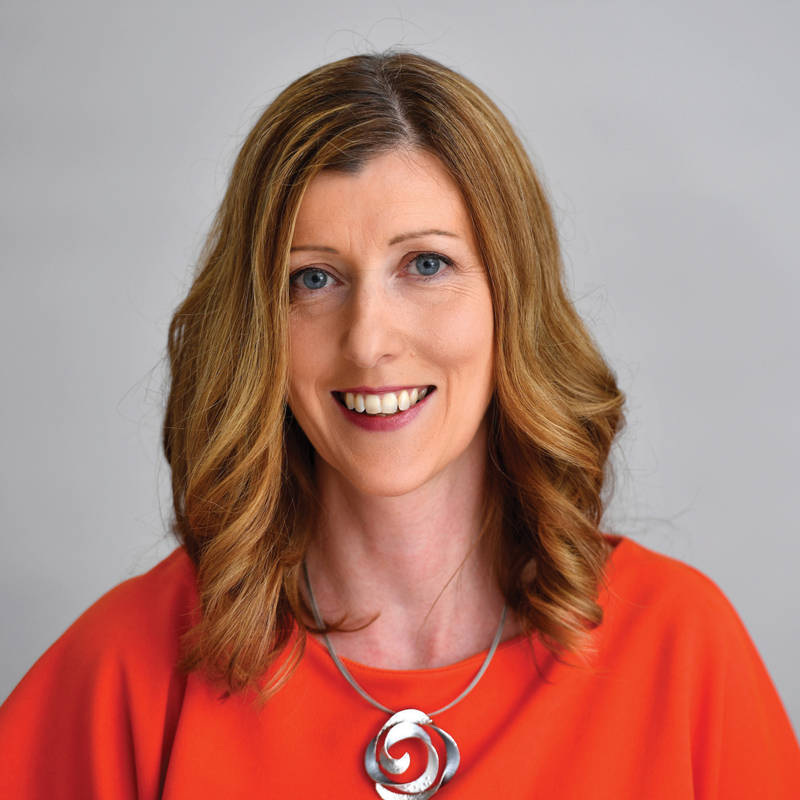
Clare Moffat
Pensions and tax expert
Clare joined Royal London in 2018 and is involved in consumer and wider industry issues. Clare is Royal London’s pension and legal expert and has appeared frequently on the BBC talking about a range of topics.
Disclaimer
The information provided is based on our current understanding of the relevant legislation and regulations at the time of recording. We may refer to prospective changes in legislation or practice so it’s important to remember that this could change in the future.