


This is the fourth year we have carried out research into how employees feel about and interact with workplace pensions. This year, our focus is on the extent to which employees with a workplace pension think about and plan for retirement.
We explore:
- How employees at different stages are approaching retirement and what they are thinking about.
- Whether they are confident they are saving enough.
- Whether they understand the options available when accessing their pension savings.
- What support they use and who they trust.
Our research was conducted by independent research agency Opinium, using a sample of 3,500 UK employees with a workplace pension. The findings reveal a wide range of experiences and highlight both opportunities and challenges. While some employees recognise the importance of retirement planning and actively monitor and manage their pensions, others have given it little thought.
Confidence is also often low, and understanding of key retirement concepts varies significantly. In addition, although a minority of employees take financial advice or guidance, most do not.
Employees are thinking about retirement but don't have a clear plan
- Just over half of employees (51%) have given their financial needs in retirement either a lot or quite a lot of thought, but fewer than one in five (18%) say they have a clear retirement plan.
- Almost three in ten employees (28%) have no retirement plan, while just over half (51%) have only a rough idea of how they are saving for retirement.
- Almost half (48%) have thought about the age at which they want to retire, while 45% have thought about the lifestyle they want in retirement.
Retirement expectations versus reality
We identified a gap between when employees would ideally like to retire and when they realistically expect to do so. At the same time, some employees have ambitious expectations about the annual income they will need for a good standard of living in retirement.
- Employees estimate that they will need £44,193 a year, on average, for a good standard of living in retirement.
- Younger employees aged 18-34 have the highest retirement income expectations. They estimate that they will need £58,413 a year for a good standard of living, compared with £35,780 among employees aged 50-69.
Expected average annual income needed for a good retirement by age group

The average age at which employees would ideally like to retire is 62 years and five months, but the age at which they realistically expect to retire is 65 years and seven months, more than three years later.
Ideal versus expected retirement age

The advice gap
When making workplace pension and retirement decisions, employees are likely to have access to a wide range of information and support, including financial advisers, government-backed guidance services, pension providers, employers, charities, family and friends, and an increasing variety of digital tools.
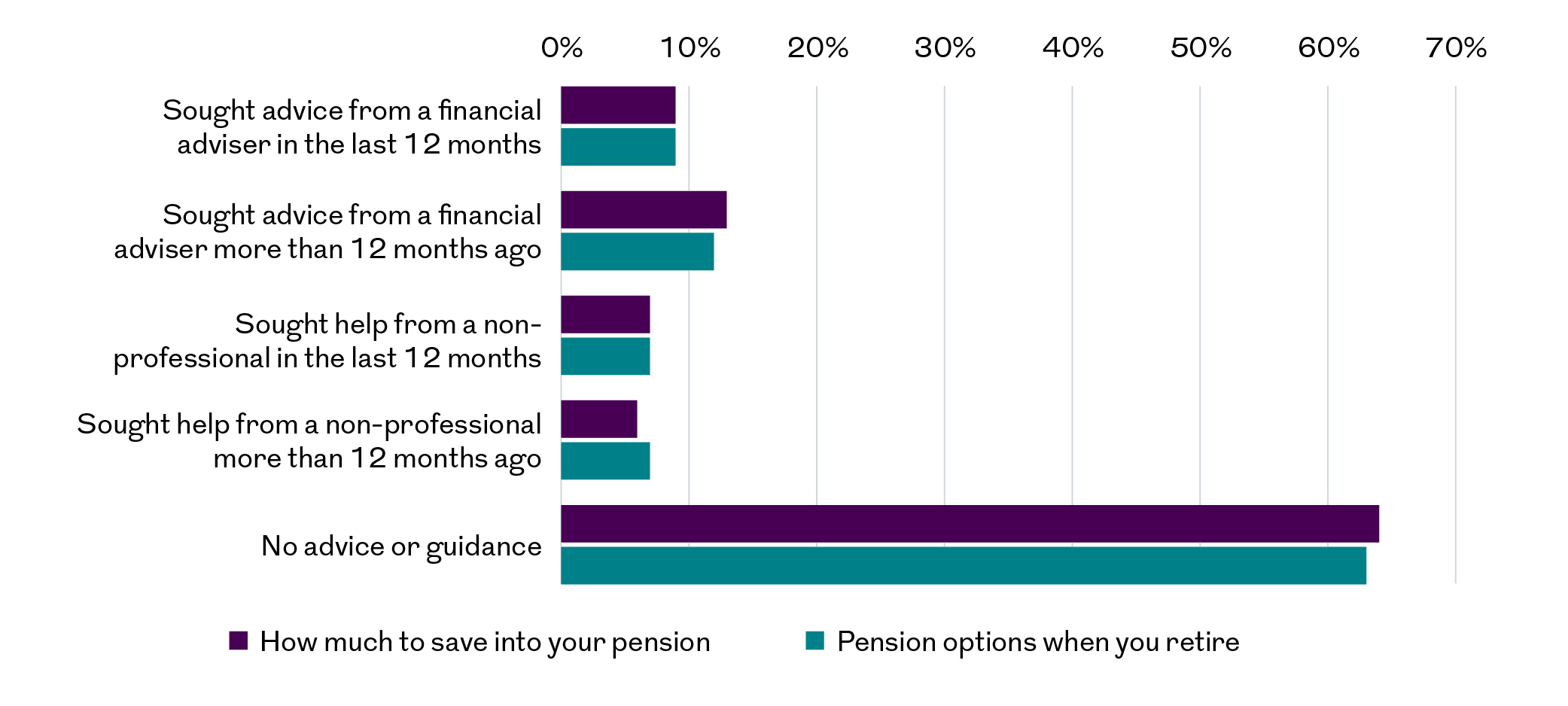
Employees who had sought advice or guidance were much more likely to have a clear retirement plan. Overall, 69% of employees with a workplace pension have a clear or rough plan for retirement. This rises to 93% among those who have sought advice from a financial adviser about how much to save into a pension and 94% among those who have sought advice about their pension options at retirement. These findings suggest that engagement with advice and guidance is closely linked to broader retirement planning behaviour.
Are employees taking retirement advice or guidance?
Looking ahead
Automatic enrolment’s success in getting employees to save means that the next challenge is helping them turn those savings into genuine retirement readiness.
Financial advisers and employers can play a vital role by building employees’ confidence, improving their understanding and providing meaningful support at key stages of the retirement journey.
Download the Workplace Pensions Report 2026 (PDF)